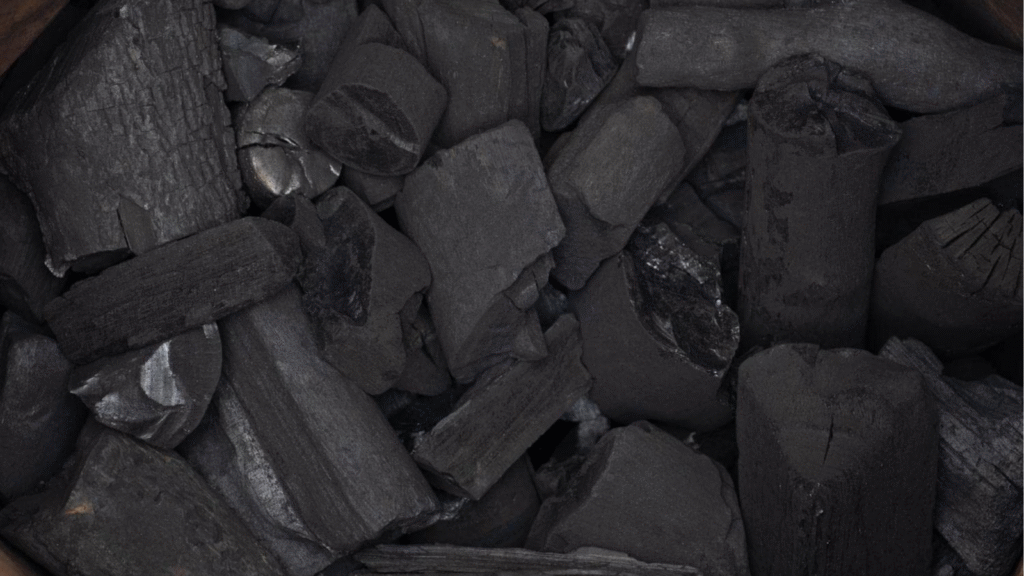
We operate as a manufacturing-led wood charcoal producer, focusing on controlled production rather than trading activities. Our role begins at the source—where raw materials are selected, processed, and transformed into consistent wood charcoal products ready for professional use.
As a direct manufacturer, we maintain ownership over critical production stages. This allows us to manage quality, consistency, and output characteristics without relying on third-party processing. Each batch reflects a production system built around discipline, repeatability, and accountability.
This manufacturing approach positions us to support long-term supply needs for export-oriented markets. Not by scale alone, but by maintaining process integrity from production to final output readiness.
MANUFACTURING SCOPE
Our scope is intentionally focused—centered on producing wood charcoal with stable performance and dependable supply continuity.
Raw material selection & sourcing control
Kiln operation & carbonization control
Grading & product classification
Post-production handling & storage
Capacity & batch consistency management
MANUFACTURING SCOPE
Manufacturing at Grant Giant Charcoal is built on controlled execution rather than volume-driven output
1. WOOD SELECTION
Hardwood with a density above 0.6 g/cm³ is selected (halaban, tamarind, acacia, rosewood, etc.). Logs are checked to ensure moisture is below 25% and free from fungus or soft spots.
2. WOOD DRYING
The wood is dried under shade for 5–10 days, depending on weather. Workers check dryness by weight and the sound of a “clean crack” when two logs are tapped together.
3. KILN PREPARATION
Traditional earth or brick kilns (“kayu bakar kubangan”) are cleaned of ash. Vents (bawah, samping, dan atas) are inspected so they can be opened or closed smoothly during the burn.
4. LOADING THE KILN
Wood is stacked vertically at the center and horizontally at the sides. This pattern ensures heat rises steadily and reduces the risk of “dead zones” that don’t carbonize evenly.
5. FIRST IGNATION
A small fire is started at the lower vent using dry twigs. The front vent is left open for 45–90 minutes so temperature climbs to 150–200°C.
6. CONTROLLED CARBONIZATION
When the smoke thickens to white (indicating moisture release), airflow is reduced. As temperature reaches 250–300°C, the smoke shifts to yellowish-blue, marking the start of true carbonization.
Workers adjust vents every 30–40 minutes, preventing oxygen from entering too much while keeping heat stable.
7. SECONDARY CARBONIZATION
The kiln interior now reaches 350–450°C. The flame is no longer visible—only glowing embers. This stage lasts 6–12 hours depending on kiln size. Too much oxygen will turn wood to ash; too little oxygen produces brittle charcoal. The balance is maintained manually.
8. KILN SEALING
When smoke becomes thin and almost transparent (sign of completed devolatilization), all vents are sealed with clay, ash, or wet soil. The kiln is fully closed so residual heat finishes the carbonization process without open flame.
9. COOLING DOWN
The sealed kiln cools naturally for 24–48 hours. Traditional makers touch the outer kiln wall—if it’s still warm like afternoon stones, it cannot be opened. Only when it feels neutral (room temperature) the charcoal is safe to remove.
10. UNLOADING & SORTING
Charcoal is unloaded manually using iron hooks. Workers immediately separate:
Grade A+ → large, dense, ringing sound
Grade A → medium, uniform carbon
Reject → cracked, under-burnt, or dusty pieces
11. QUALITY CONTROL
Each batch is checked for:
Moisture: target < 8%
Ash Content: 2–5% depending on species
Fixed Carbon: 70–85% for standard hardwood
Hardness: drop-test and manual compression
Any batch outside standard is re-processed or downgraded.
12. PACKING
Charcoal is air-dried again for 8–24 hours to remove leftover surface moisture, then packed in kraft bags or PP sacks lined with plastic. Bags are stored on pallets to avoid ground moisture before shipping.
MANUFACTURING FACILITIES
Our wood charcoal production operates from dedicated facilities in Central Java, Indonesia—a region known for long-standing charcoal craftsmanship and access to wood-based resources.
MARKET ORIENTATION
We focus on:
Product-Driven Buyers
Partners who select charcoal based on performance, consistency, and material characteristics—burn time, strength, and grading stability.
Long-Term Manufacturing Alignment
Customers seeking reliable, repeatable production rather than short-term or spot supply.
Specification-Focused Markets
Markets where charcoal is defined by clear product standards, not treated as a generic commodity.